

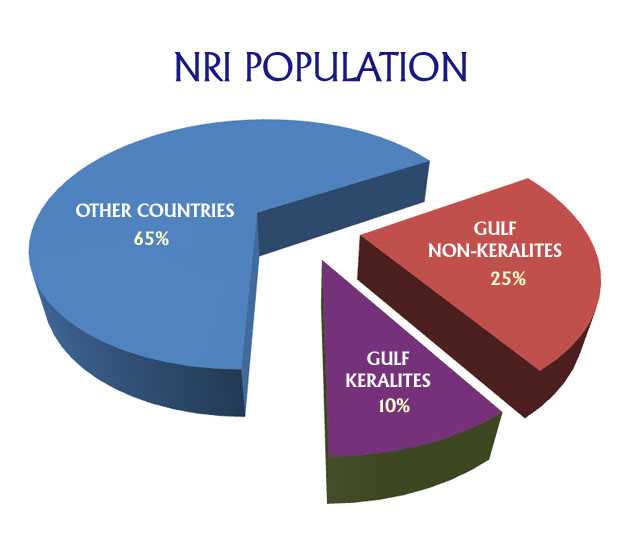
Expatriate Non-Resident Indians (NRI) based in the United States of America (USA) and Europe are usually the cynosure of attention in their mother country. But, the truth is, that of the diaspora of 20 million NRIs spread across 110 countries around the globe, nearly 7 million are located in the Gulf States in the Middle-East. This 7 million work force includes 2 million Gulf NRIs from one state of India: Kerala – that comprises 10% of all NRIs across the globe and nearly 30% of all NRIs in the Gulf States.
NRI Remittances
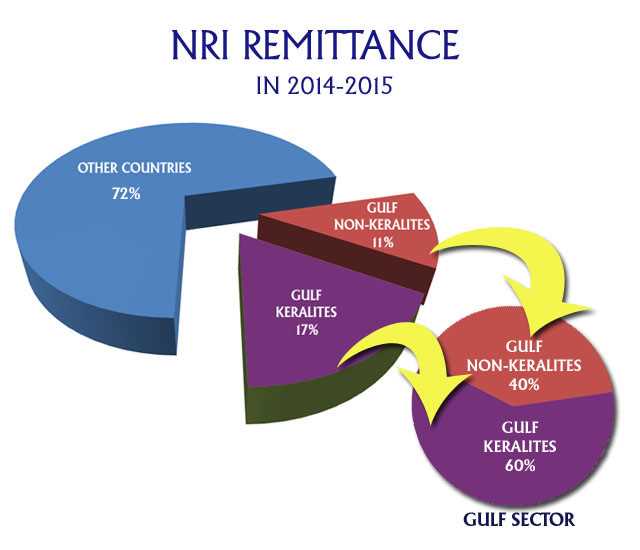
Foreign exchange reserves in India have, for long, been heavily dependent upon inward remittances by NRIs. During the FY 2014-15, remittances to India touched USD 70 billion (equivalent to Rs.425,000 crore). Of this, remittances from NRIs employed in the Gulf States viz. Saudi Arabia, Qatar, Bahrain, Kuwait, Oman, etc amounted to USD 20 billion (equivalent to Rs.115,000 crore). The share of remittances by expatriates from Kerala was an astounding USD 12 billion – Rs.70,000 crore (17% of the total annual remittances and 60% of the contribution from the Middle-East).
The huge contribution of Gulf NRIs from Kerala
Comprising only 10% in terms of overall numbers, this contribution of 17% by Kerala based Gulf NRIs in terms of value is to be marveled at. The sheer magnitude of the statistic becomes even more incredible when you factor in the high wage employment that is characteristic of NRIs located in the USA and Europe vis-à-vis the comparatively low-end jobs of migrant workers in the Gulf States. The figures speak for themselves – affluent NRIs in the west are guided by a consumerist culture and retention of surplus for their future life in their adopted countries. Gulf NRIs willingly remit the major portion of their earnings to India and thus contribute immensely to capital formation and economic growth.
Significance of Gulf NRI remittances for Kerala

For the country as a whole, the share of external remittances is 3.4 per cent of the Gross Domestic Product (GDP). But, for Kerala, these remittances, which are the foundation of its economy, contribute 34 per cent to its GDP (this is ten times the national percentage). NRI remittances are double the revenue receipts of the State Government, six times the funds contributed by the Government of India to the state exchequer, twice the annual non-plan budget expenditure of the State Government, 36 times the foreign exchange earned by the cashew industry and 30 times the marine export earnings. Needless to say, any set-back to employment prospects and savings potential of Gulf NRIs will have grave consequences for the economy of Kerala
Why are oil prices crashing?

Plummeting global oil prices have grabbed media headlines and captured eye-balls the world over. The price of a barrel of oil has plunged 76% from USD 114 in June 2014 and is now hovering around USD 30 per barrel. A triple whammy of doubling of US production, focus of oil pumping countries on protecting market share rather that profit margins, and weak economic indicators in Europe and China has played havoc with oil prices, and the prospects of a recovery in the foreseeable future are bleak.
Why does it matter to Kerala?
Historically, Kerala has been vastly dependent upon NRI remittances from the Gulf States to fuel its economy. The rest of India is cheering the tumbling oil price. Lower prices at the petrol pumps, shrinking of the current account deficit, and reduced inflation are certainly good news. But, down south in Kerala, the oil price meltdown is likely to cause collateral damage to every second household in the State.
Impact on employment
The economies of the Gulf States are predominantly fuelled by oil revenues. Dipping oil prices are seriously damaging their economic growth and future investment plans are being postponed. The billion dollar question that haunts every Gulf NRI and his family members is: how long will it be before company restructurings, freezing of compensation packages, a sons-of-the-soil tilt and mass layoffs sound the death knell for the doomed NRI worker? Inevitably, the turning off or even tapering of the remittance flow will impede the economic growth of the State given its dependence on this source for its development.
Impact on families
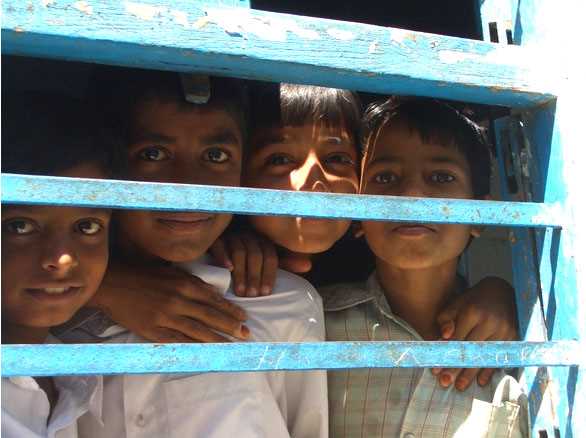
Lakhs of households in God’s own country rely on financial support from their family members employed in the oil industry, on construction sites and in the service sector in the Gulf to meet their monthly expenses. Typically, expatriate workers from Kerala employed in the Gulf States are lower middle-class or poor migrants, living a life of hardship far from their families just to keep the home fires burning. Bereft of the income flow from their employment, the families would be left with little option but to face dark days with hardly any light at the end of the tunnel.
Impact of reverse migration

Unemployed migrant workers returning home will be an additional issue giving rise to serious sociological, psychological, financial, rehabilitation and reintegration issues. Kerala’s economy will be hard pressed to discover the financial resources, infrastructure and manpower to re-skill the Gulf returnees and successfully re-employ them or finance entrepreneurial ventures. The cessation of remittances taken together with escalating unemployment would be a lethal combination that could lead to social unrest.
Impact of Gulf State decisions

The Gulf States rulers have already rung the alarm bells with their call to citizens to prepare for austerity measures. More disturbing is the forecast by the International Monetary Fund (IMF) that Saudi Arabia, the largest oil producer, could well end up insolvent if oil prices show no improvement. Oman has lost little time in advising its oil refiners to target expatriate workers first before laying off local employees. The handwriting is on the wall. NRIs may just be returning home to Kerala against their wills and far earlier than they expected.
Is anybody listening?
All the excitement, hype and propaganda are centred on the white-collar NRI population in the USA and Europe. There has been little or no outreach to 7 million NRIs in the Gulf States. Shri S. Irudayarajan. Head (Migration Department), Centre for Development Studies, Thiruvananthapuram is reported to have said, “Oil prices have now reached rock bottom and with a huge Indian population in the Middle-East, an expert team should be formed to study the impact of falling oil prices and what its bearing would be on the Indian population working in the Middle-East. None at the moment knows how long this will be like this and how much more fluctuation would be there. Certainly, the economy of oil producing countries has always been linked to the price of oil. A look into the scenario is best advisable by a team of experts and it is meant to assess the situation. It’s always best not to be caught off-guard.” Wise words indeed, but is anybody listening? While a red carpet is rolled out to fete and fawn over NRIs from the USA and Europe, their poor cousins in the Gulf States are left to fend for themselves. Evidently, some NRIs are to be welcomed with open arms and others dismissed with a shrug.
Bibliography
- Press Trust of India. Oil price crash to hit remittances from Gulf: Assocham.articles.economictimes.indiatimes.com.10 Jan 2016.Web.10 Feb 2016
- Albin J. Impact of oil price on Kerala’s economy.mangalam.com.1 Jan 2016.Web.10 Feb 2016.
- Krauss C. Oil Prices: What’s Behind the Drop? Simple Economics. 3 Feb 2016. Web. 10 Feb 2016
- Abraham R. Oil Price Slump Portends Tough Times for Kerala Expats. 12 Jan 2015. Web. 10 Feb 2016
- Venkataramakrishnan R. Low Oil Prices are seriously hurting the Gulf – and the 7 million Indians who live there. 13 Nov 2015. Web. 10 Feb 2016.
- The Hindu. Falling oil prices and its impact on migration. 25 Oct 2015. Web. 10 Feb 2016.


















This contemporary article takes on a global perspective of how Indians as a whole (nationals and ex-pats) are dealing with or will deal with the looming oil crises. Although it generalizes Indian well-being nationally and abroad, it does so in way which actively includes how the oil crises will affects Indians at home and Indians abroad. Specific interest is placed on how the crises will affect different aspects of life which is appealing to the reader and presents the article in a way so most people can relate.
That was some very good insight by Mr. Rowe. I have been hearing about oil prices crashing and the possibility of many NRIs returning to India. It is very sad that people who have been working for years in conditions better or worse will have to give up their hard earned savings and lifestyles. This article has given me some clear answers. Hope the Gulf States and the Indian government look seriously into this matter and give the Gulf NRIs a positive answer they deserve.