

We know how volatile the stock markets are. A small sell-off can create panic and there by the share market plummets. Players in the market wish to earn profit with the minimal risk. That’s where hedging comes to play.
What is Hedging?
Hedging is nothing but to make an investment in a stock so as to reduce the risk of adverse price movements.
The most simple example that can be quoted here is an investor owning shares of Jindal Steel and Power Ltd, anticipates a volatile market in the near future. He sets a futures contract in order to sell those shares at a specific price and a specific date. That avoids him of the market fluctuations.
Hedging is to buy stocks that you expect to go in value and you set up a strategy that will minimize or offset any loss if your stock price goes down. It helps to protect your asset from falling below a certain price and thereby incurring losses.
Factors involved in hedging
Hedging your stock market portfolio can depend on mainly three factors, namely
- Size of your portfolio
- Long time or short time perspective
- Familiarity with the derivatives securities products.
If risk is properly managed, it is possible to reduce risk without sacrificing any expected return. Periodical hedging can reduce, avoid or diversifying risk and can actually result in higher returns over the full market cycle.
Methods of hedging
1. ETF- Exchange Traded Funds
An ETF holds assets like stocks, commodities, or bonds and are traded on stock markets like shares. They are investment funds that track an index like a stock or a bond index e.g. NSE.
ETFs provide combinations of multiple assets and asset classes that can be to used to create a more balanced portfolio. For example, if an investor already owns a portfolio of single stocks, he can easily buy a bond ETF to add bond exposure as a means of hedging.
2. Futures
It’s to take just the opposite position of what you have in spot market i.e., if you buy shares (long) in spot market, offset the risk by taking a short position in futures and vice versa. More detailed explanation can be found in the following link.
3. Options
Hedging with options is simple to understand. It is an optional contract i.e., buying or selling of the asset at the expiry date is optional.
For example, a call (option to buy) on 100 shares of HDFC can be purchased for much less than the actual shares. But if the price of HDFC rises above the strike price, the investor can cash in either of two ways: He can exercise the option, forcing a seller to deliver the stock at the strike price, and then can make a profit by selling at the market price. Or the HDFC call itself can be sold at a profit.
Protective Put is another hedging technique in Options
In share markets, small sell-off can create panic. It’s better to protect your assets against any volatilities in the market. A shrewd investor will definitely do so.
Recommended Read :
- What is a Derivative?
- Difference Between Futures and Options
- What are Futures How to Trade in Futures?
- What is Put Call?
- What is Intrinsic Value?
- How can Derivatives protect your Stock Investment?
- Difference Between Hedging and Speculation
- Relation Between Spot and Futures Price
- What are Stock Index Futures?
- Insuring Stock Portfolio with Protective Put
- What is Speculation?
- Hedging vs Speculation





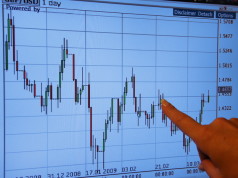

















Hedging is a way of protecting oneself from financial losses. Hedging is considered an advanced investment strategy, but it is advisable for every trader to know about it. Hedging is a sort of insurance which a trader takes to prevent adverse financial losses in case of market fluctuations. Imagine that a trader has purchased a stock and now he feels that it will not earn him enough income as he had assumed, in this case the trader will purchase another stock as an offsetting asset which will nullify the difference in case of price fluctuations, this is hedging. A proper hedging strategy can protect a trader against various risks like commodity risk, market risks, currency risk, etc.. Hedging is mainly done with the help of Derivatives.
Oh that sounds appealing. The process is a little complex but if one can understand the in and out of it, this method of investing in stocks will be beneficial both in terms of money and mental peace. You can minimize your loss and save yourself from risk. But because the method is a little complex, one will have to gather all the information about how to go about it. Worth a read!!
Yes, Hedging is making profits by reducing your risks and thereby keeping worries at bay!